

People want implementation of Shaheed Zia’s ideals against corruption

Bangla Press
Published: 18 March 2026, 12:59 AM
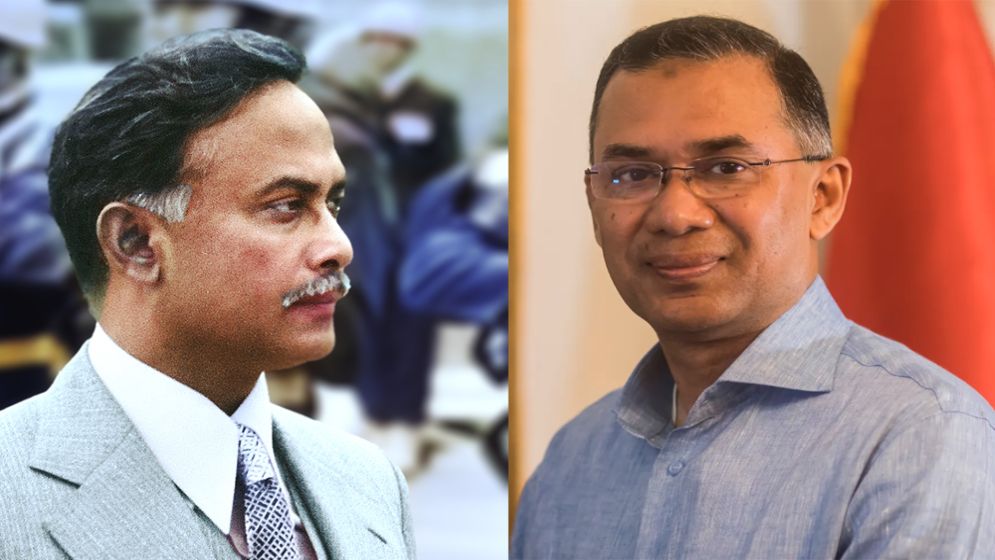
Bangla Press Desk: The memory of Shaheed Zia resurfaced on 16 March in 2026. Prime Minister Tarique Rahman inaugurated a canal excavation program on Monday at Sahapara in Kaharole upazila of Dinajpur. He formally launched the program by cutting soil with a spade. After the inauguration, he planted a tree on the bank of the canal.
With the inauguration of the re-excavation of Sahapara canal, the nationwide program titled “Excavation and Re-excavation of Rivers, Canals, and Water Reservoirs” has begun. According to the government’s election pledge, there is a plan to excavate and re-excavate 20,000 kilometers of rivers, canals, and water bodies across the country over the next five years.In the first phase, the program has started in 53 districts. Government officials said that this initiative will positively impact waterlogging reduction, improvement of irrigation systems, increased agricultural production, and conservation of water bodies.
The Prime Minister has initiated this program following the footsteps of his father, former President Ziaur Rahman. During his rule, Ziaur Rahman introduced a nationwide canal excavation program, which played a significant role in improving the rural economy, agricultural production, and irrigation systems. The current initiative is being seen as a continuation of that effort.
Even 45 years after his death, Shaheed President Ziaur Rahman remains alive in the hearts of the people of Bangladesh and holds a place of deep respect.
Ziaur Rahman’s rule marked an important period of military and political change in Bangladesh. He became President on April 21, 1977, reintroduced multi-party democracy, founded the BNP in 1978, and carried out significant reforms in agriculture, industry, and foreign policy. He remained in power until his assassination in 1981.
During his relatively short tenure, he set a unique example of honesty, dedication, and patriotism in governance. People still remember him for his integrity. He demonstrated how a head of state could live an honest life. His tenure showed that if a leader stands firmly against corruption and does not tolerate it in any form, a government can remain corruption-free.
Ziaur Rahman practiced honesty throughout his life. Wherever he found corruption, he dealt with it strictly. His integrity is still discussed among the public. He is regarded as the embodiment of honesty.
While serving as President, he never indulged in luxury, nepotism, or abuse of power. None of his family members enjoyed government privileges or special advantages. He reduced the luxury of the presidential residence and maintained a simple lifestyle. He followed a zero-tolerance policy against corruption throughout his life.
According to those close to him, he used to start work early, did not burden the state with personal expenses, and instilled the same values in his family. His dedication and planned efforts for national development were remarkable.
Shaheed Zia initiated a new vision for national development. The development programs implemented during his rule effectively improved the lives of marginal people. Renowned writer Humayun Ahmed wrote in his novel Deyal: “The people of Bangladesh began to feel that after a long time they had a truly honest head of state… Zia was genuinely honest. After his death, it was found that his family had no accumulated wealth.”
Forty-five years after his martyrdom, the responsibility of running the country is now in the hands of his eldest son, Tarique Rahman. Upon assuming office as Prime Minister, he has brought back Zia’s ideals into governance. His simple attire, punctuality, and willingness to face traffic without protocol reflect those ideals.
The strongest pillar of Shaheed Zia’s ideology was honesty and a firm stance against corruption. After his death, the absence of such anti-corruption leadership has been deeply felt. Seeing Zia’s reflection in Tarique Rahman, people are hopeful. The public wants a corruption-free Bangladesh—where bribery is absent, citizens are not harassed, and they do not have to live in fear of extortion.
Over the past 45 years, corruption has become institutionalized in Bangladesh. From top officials to lower staff, bribery has become widespread. Jobs, promotions, and postings often require bribes. Key positions are effectively auctioned. In many government departments, including public works and power development, engineers must pay for favorable postings. This practice, once an open secret, has intensified in recent times.
Many believe that corruption during the interim government surpassed all previous records. Bribery rates doubled, and major appointments reportedly involved large sums of money. Corruption has spread like cancer among policymakers, with frequent reports of scandals in the media.
When someone secures a position through bribery, their primary goal becomes recovering that money through corruption. First, they recoup the bribe, then they accumulate personal wealth.
The current democratic government, under Tarique Rahman, has taken charge amid this situation. The first priority is to curb corruption through strict zero-tolerance policies.
If corruption alone is eliminated, 90% of the country’s problems could be solved. Ending illegal transactions in government services would reduce public suffering significantly. To achieve this, the government must follow the ideals of Shaheed Zia.
Zia was able to keep himself free from corruption, which enabled his government to effectively combat it. Therefore, the first task of the cabinet should be to reject corruption in all forms—whether in recruitment, postings, lobbying, tendering, or political interference in development projects.
Through the canal excavation program launched on March 16, it seems as if Shaheed Zia has returned to Bangladesh once again. If the Prime Minister follows his father’s ideals and takes a firm stand against corruption, the country’s progress will be unstoppable. The people want to see the reflection of Shaheed President Ziaur Rahman’s ideals in Tarique Rahman’s leadership. In the fight against corruption, just like canal excavation, Shaheed Zia should be his guiding force.
Source: daily Sun
BP/SP
[Bangla Press is a global platform for free thought. It provides impartial news, analysis, and commentary for independent-minded individuals. Our goal is to bring about positive change, which is more important today than ever before.]
YOU MAY ALSO LIKE
Politics
11-Party Alliance’s Eight Demands Serve People’s Interests, Says Shafiqur
3 days ago
by Bangla Press

Politics
DRU has played a significant role in achieving the country's democracy: Rizvi
1 week ago
by Bangla Press
Politics
Prince Says Opposition’s December Movement Threat Echoes Past Events
2 weeks ago
by Bangla Press
Sangeet Academy